

Themes That Might Interest You⬇️
- The Root-to-Tip Cutting Trick
- Why a Hot Brine?
- Red Onions: More Than Just a Garnish
- Digestion Support in Every Bite
- Aromatics That Make a Difference
- A “Make-Ahead” Kitchen Staple
- Ways to Use Your Pickled Onions
- Customizing Your Pickled Onions
- FAQ
The Root-to-Tip Cutting Trick
The way you slice your onions here isn’t just a minor detail — it genuinely determines the final texture. Cutting from root to tip (rather than across the middle) slices along the onion’s natural fibers instead of through them, which is exactly why the pieces keep their shape and stay crunchy even after sitting in brine.
If you slice the other way, you’re cutting straight through those fibers, which tends to leave you with softer, more delicate pieces that lose their bite much faster. It’s a small positioning change with a big payoff in texture.
Why a Hot Brine?
Bringing the water, vinegar, sugar, and salt to a boil before pouring it over the onions does two important things. First, it fully dissolves the sugar and salt so you get an evenly balanced brine throughout, rather than pockets of undissolved granules sitting at the bottom of the jar.
Second, the heat gently softens the outer layer of the onion just enough to let the pickling flavor penetrate quickly, while the onion still holds onto its crunch. That’s part of why these are ready to eat in just about an hour, rather than needing days like some cold-brine pickling methods.
Red Onions: More Than Just a Garnish
Red onions bring real nutritional value to the table, not just color and crunch. They’re rich in quercetin and vitamin C, two powerful antioxidants that help fight inflammation in the body — and quercetin in particular is one of the reasons red onions have such a vibrant purple-red hue.
Those same antioxidants are also linked to supporting a healthy, glowing complexion, so this isn’t just a flavorful condiment — it’s one that’s quietly doing some good for your skin too.
Digestion Support in Every Bite
The vinegar in this brine isn’t just there for tang — it also acts as a natural digestive aid. Vinegar can help stimulate the enzymes your body uses to break down food, which is part of why a bite of pickled onions after a heavier meal can genuinely help reduce that bloated feeling.
It’s a nice reminder that a condiment can do more than just add flavor — pairing these onions with a rich sandwich or a heavy taco isn’t just about taste, it’s actually functional too.
Aromatics That Make a Difference
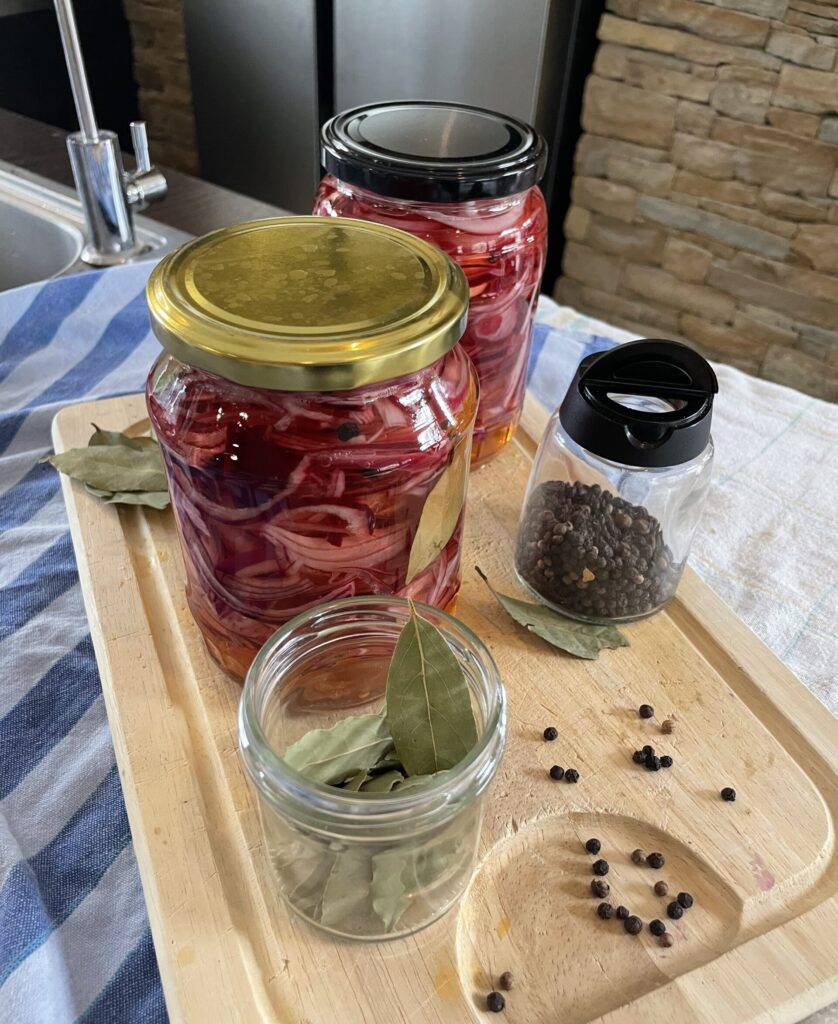
The bay leaves, peppercorns, and garlic cloves tucked into each jar might seem like a small addition, but they infuse the brine with a subtle depth that plain vinegar and sugar alone can’t achieve. As the onions sit, these aromatics slowly release their flavor into the liquid.
Placing the garlic both in the middle and at the top of the jar (as the recipe calls for) also means every layer of onion ends up close to a clove, so that garlic flavor gets distributed evenly through the whole jar rather than concentrating in just one spot.
A “Make-Ahead” Kitchen Staple
This is exactly the kind of recipe worth having in your regular rotation — about 10 minutes of hands-on prep gives you a jar (or two) that stays vibrant and ready to use for up to two weeks in the fridge. That makes it a genuine time-saver on busy days when you want to add flavor to a meal without any extra cooking.
Once you’ve made a batch, it becomes this quiet, always-available upgrade sitting in your fridge — the kind of thing that turns a plain sandwich or bowl into something that tastes a little more intentional with zero extra effort.
Customizing Your Onions
This recipe is easy to scale up or down depending on what jars you have on hand — Stellka’s Tip specifically points out that you can use any size jar, as long as you divide the onions, aromatics, and brine evenly between them.
You’ve also got flexibility on the vinegar itself — white vinegar, apple cider vinegar, or rice vinegar will all give you a slightly different flavor profile, so it’s worth experimenting to find your favorite version.
FAQ
Yes — white vinegar, apple cider vinegar, or rice vinegar all work well here, each giving a slightly different flavor to the final pickle.
Cutting with the fibers instead of against them is what keeps the onion pieces crunchy and holding their shape in the brine, rather than turning soft and floppy.
Yes, though red onions are recommended here for their color and the added antioxidant benefits like quercetin — white or yellow onions will work too, just with a milder flavor and less vibrant color.
No, that’s just for convenience — you can use one large jar or several small ones, as long as you keep the ratio of onions, aromatics, and brine consistent.
Up to 4 weeks in the fridge. Realistically: if you seal the jar while the brine is still hot and keep it refrigerated the whole time, they can easily last a couple of months — just toss them if you ever see mold, sliminess, or an off smell.

Pickled Onions
Ingredients
Method
- The Brine: In a small pot, bring the water, vinegar, sugar, and salt to a boil. Stir until the sugar and salt have completely dissolved.
- The Prep: While the brine is heating, cut up your onions. Position the onion so the root is facing you before you slice. This is important because slicing from root-to-tip helps the onion pieces keep their shape and crunch. Peel the garlic cloves and set them aside.
- The Jars: Place the sliced onions into two mason jars. Into each jar, tuck in two garlic cloves—placing one in the middle of the onions and one at the top.
- The Aromatics: Add 1.5 bay leaves and 1 tsp of peppercorns to each jar.
- The Pickle: Pour the hot vinegar brine over the onions until they are fully covered. Close the lids and let the jars reach room temperature.
- The Chill: Place the jars in the fridge for at least 1 hour before eating.
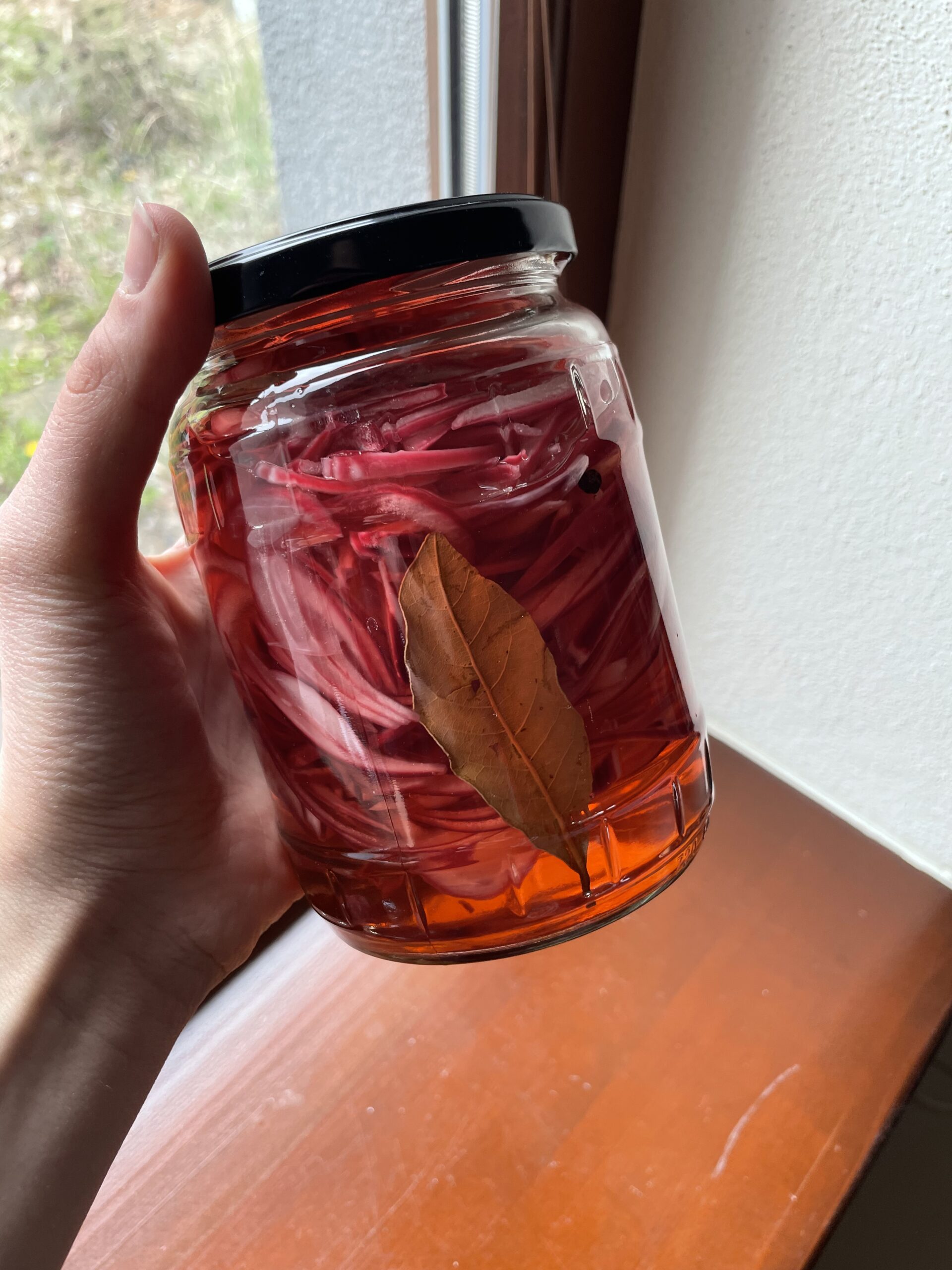
- Enjoy! These will stay vibrant and delicious in your fridge for up to 2 weeks.