
I Really Struggled to Name This One
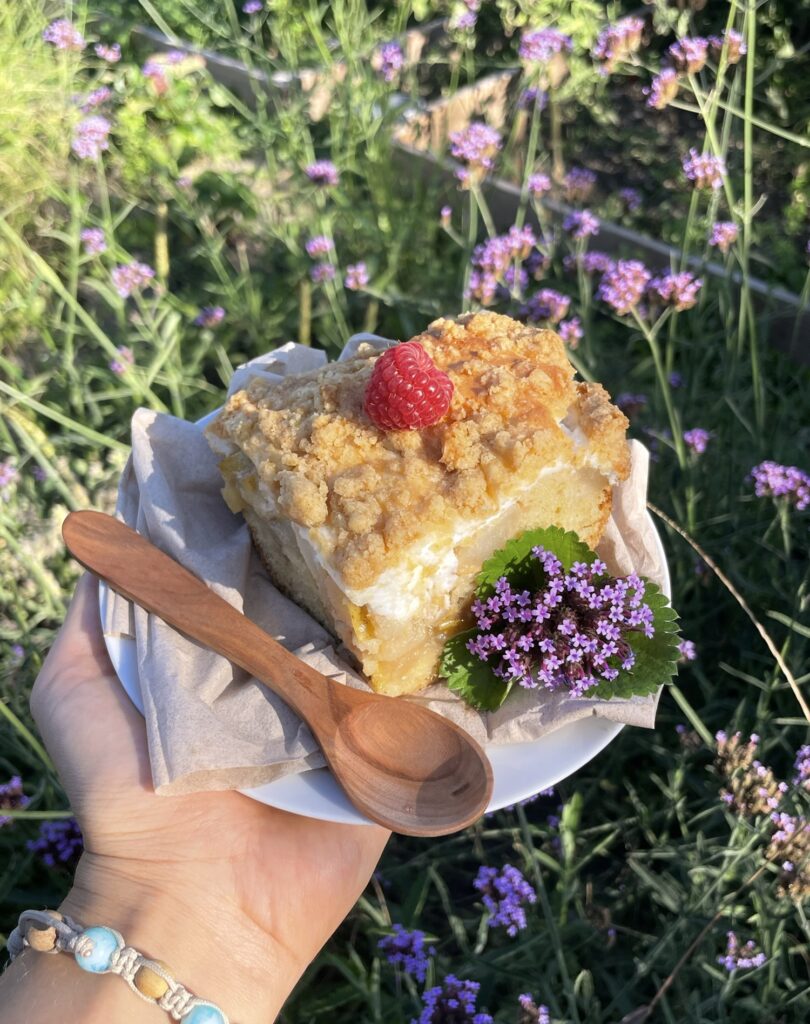
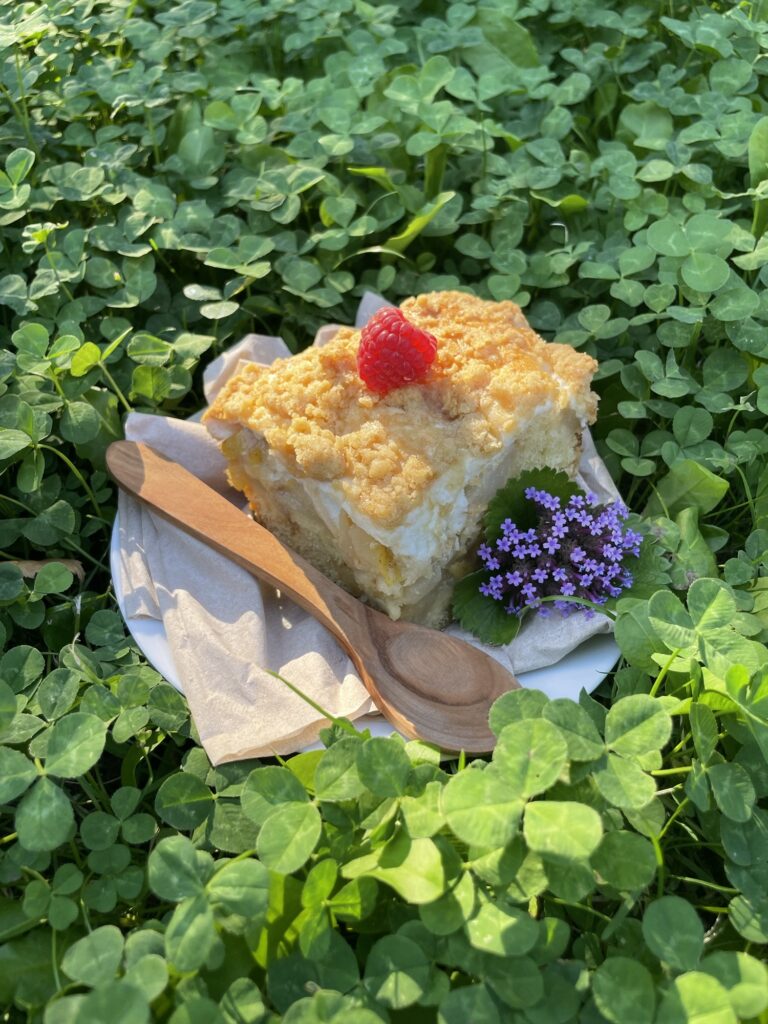
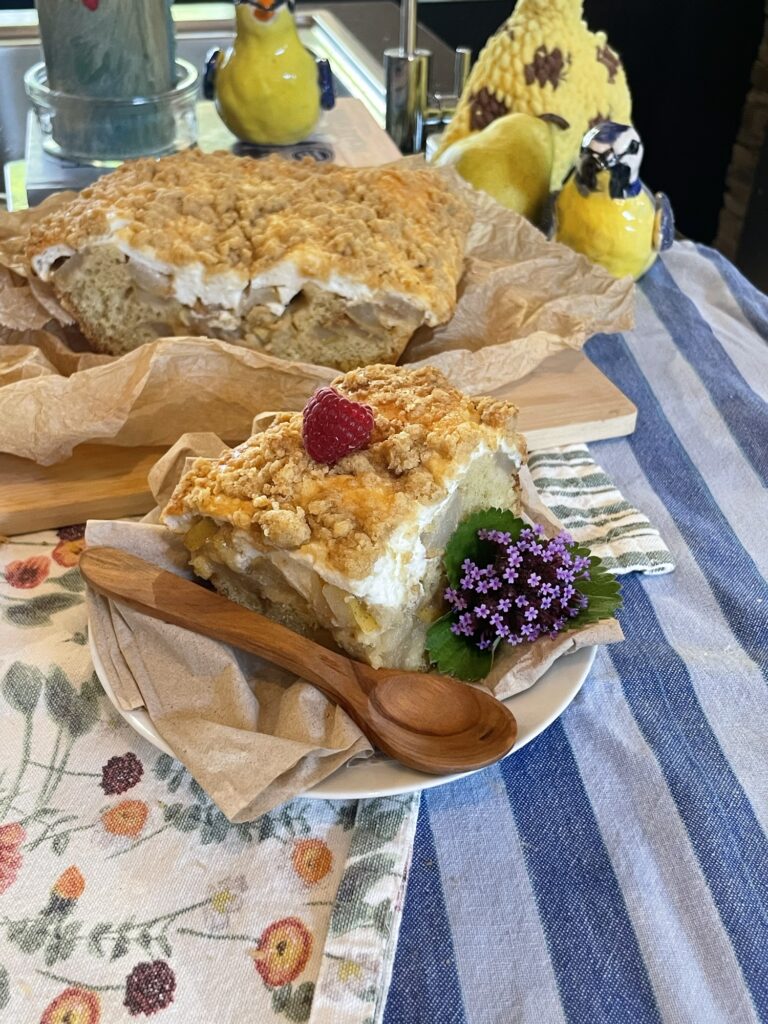
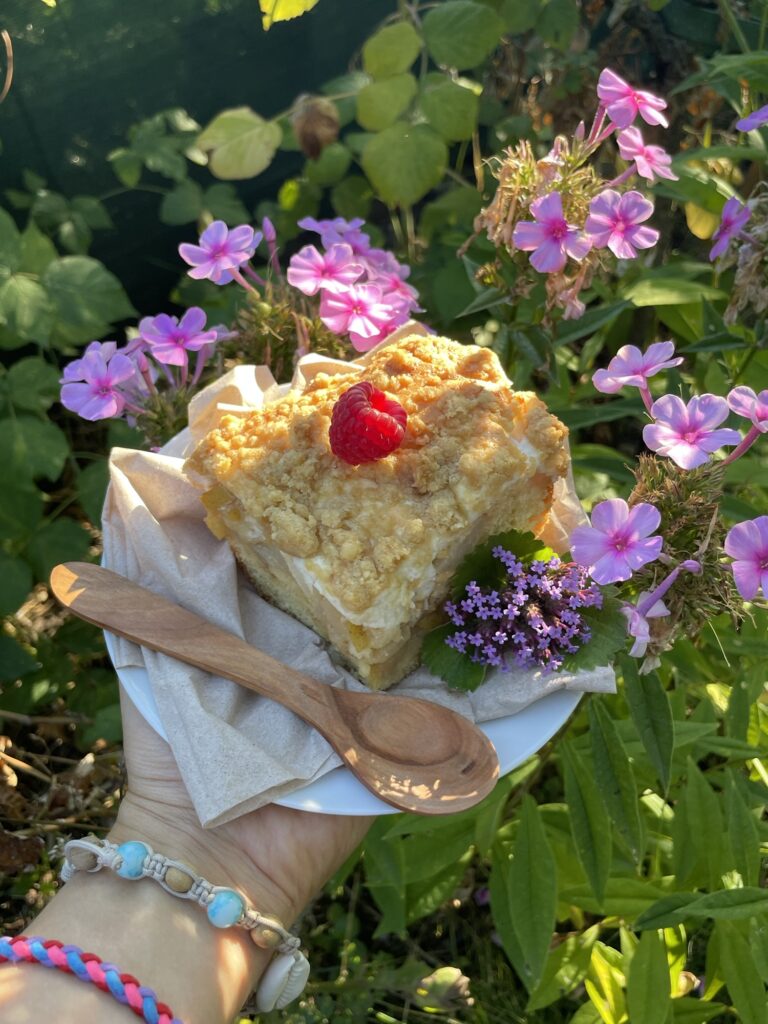
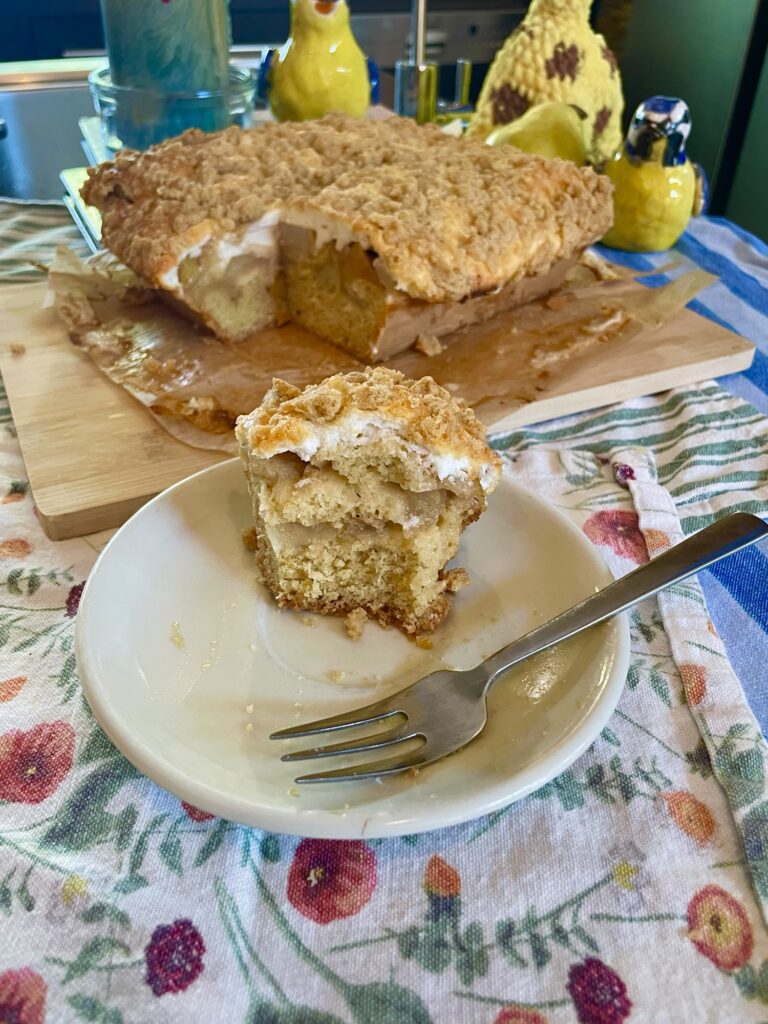
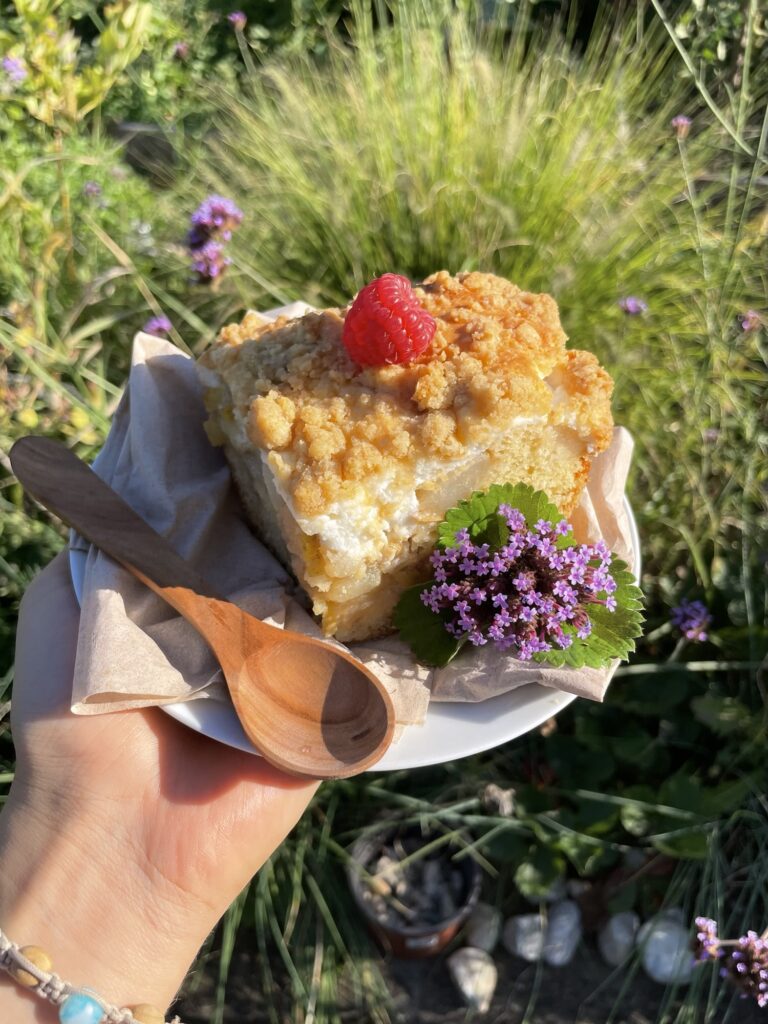
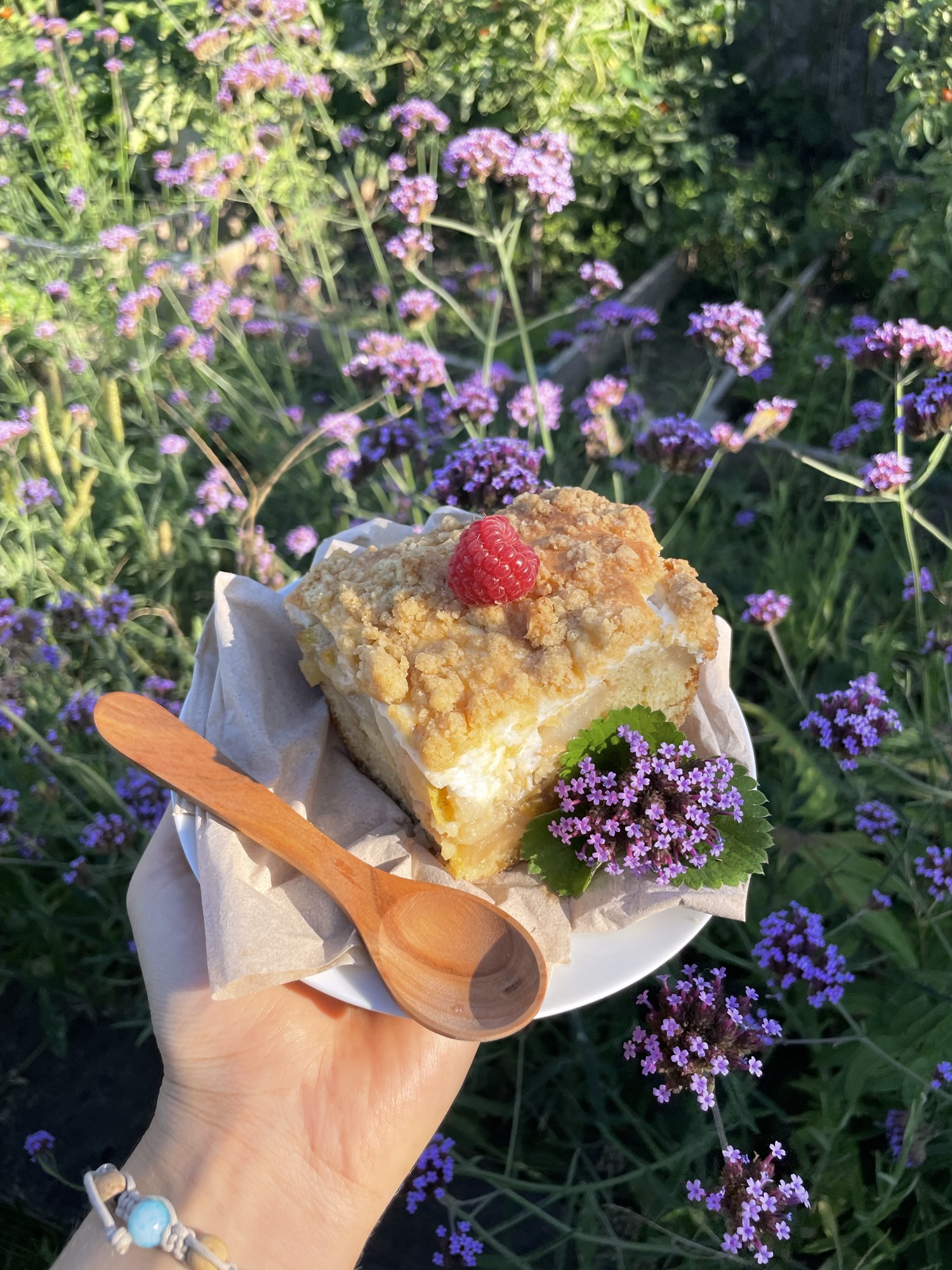
Honestly, naming this recipe was harder than making it — “pear cake with foam and crumble” doesn’t exactly roll off the tongue, but “Pear Crumble Cloud Cake” finally captured what’s actually going on here: a soft sponge base, spiced pears, a light “cloud” of foam on top, and a buttery crunchy crumble finishing it all off.
It sounds like a lot at first glance, but none of the individual steps are difficult on their own — it’s more about layering everything correctly than any single technique being hard to pull off.
If you enjoy these types of recipes, be sure to check out my:
Lemon Poppy Seed & Cherry Cake🍒
Themes That Might Interest You⬇️
- I Really Struggled to Name This One
- Why Pears Work So Well Here
- Why Weighing 2 Ingredients Ahead of Time Helps
- The Role of the Foam Layer
- Why the Egg Whites Look Yellowish at First
- Getting the Crumble Right
- Frequently Asked Questions
Why Pears Work So Well Here
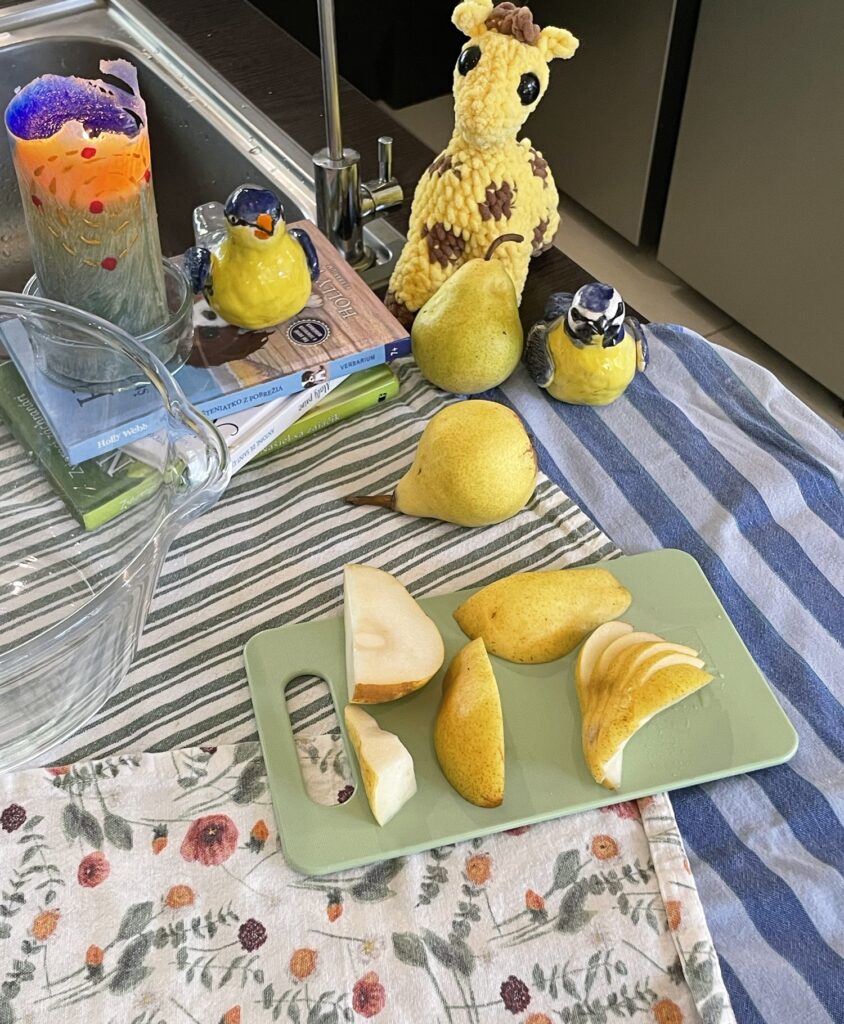
Pears bring a softer, more delicate sweetness than apples would in a similar bake, and they hold up nicely under the foam layer during baking rather than turning to mush. The warm spices — cinnamon and nutmeg — round out that natural pear flavor without overpowering it.
I used very ripe, sweet pears and they worked perfectly here — so don’t feel like you need to hunt down slightly underripe ones. Ripe pears just mean a little extra natural sweetness in every bite.
Why Weighing 2 Ingredients Ahead of Time Helps
Weighing out the sugar and Greek yogurt / sour cream before you start whipping the egg whites makes the foam step go a lot more smoothly. Once the egg whites are properly whipped, you don’t want to be scrambling to measure things while trying not to deflate them.
It’s a small prep habit, but it makes that particular part of the recipe feel far less rushed and stressful, especially if it’s your first time working with a foam-style topping like this.
The Role of the Foam Layer
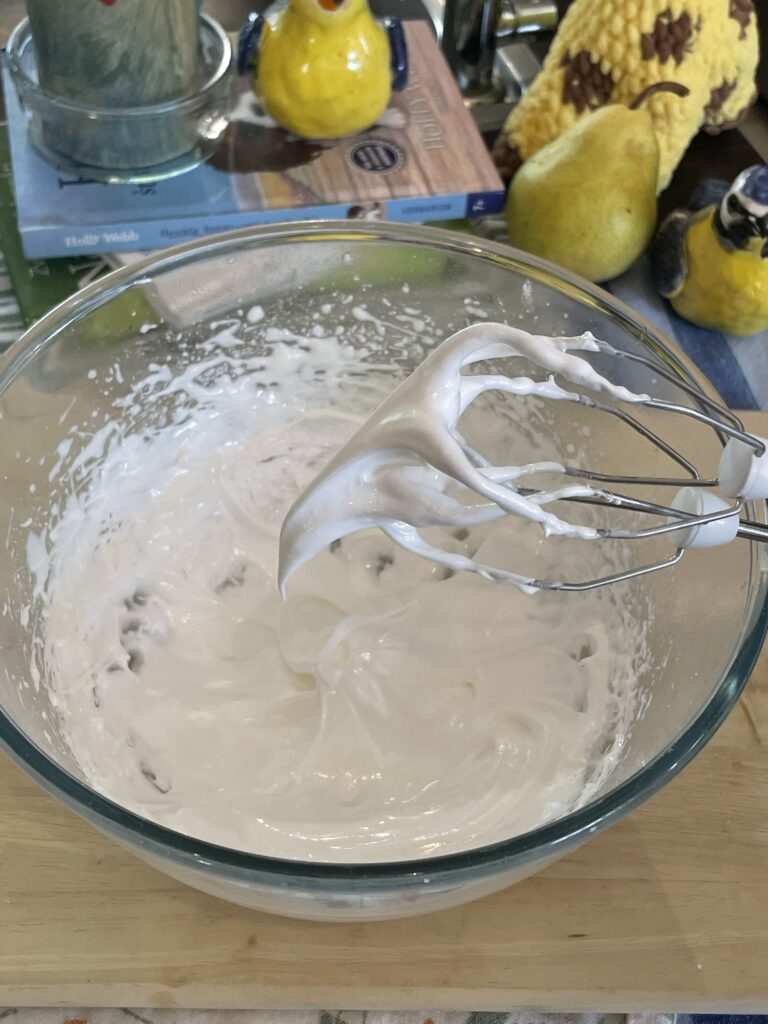
The “foam” here isn’t a traditional meringue exactly — it’s a whipped egg white base folded together with Greek yogurt or sour cream and a bit of cornstarch. Once baked, it turns into something that’s genuinely like a cloud — light and soft, with a delicate set that’s completely different from the airy sweetness of a classic meringue.
That cornstarch is doing important structural work, too — it helps the foam hold its shape and set properly during baking, rather than collapsing or staying too loose once it comes out of the oven.
Why the Egg Whites Look Yellowish at First
If you’re whipping the egg whites and they still look a bit pale or yellowish before you add the lemon juice, that’s completely normal — fresh egg whites often start out with a slight tint before they fully whip up. Once the lemon juice goes in and whisking continues, they’ll turn properly white and frothy.
That lemon juice isn’t just for flavor either — the acidity helps stabilize the egg whites as they whip, which is part of why it’s added partway through rather than right at the very start.
After adding the sugar:
Getting the Crumble Right
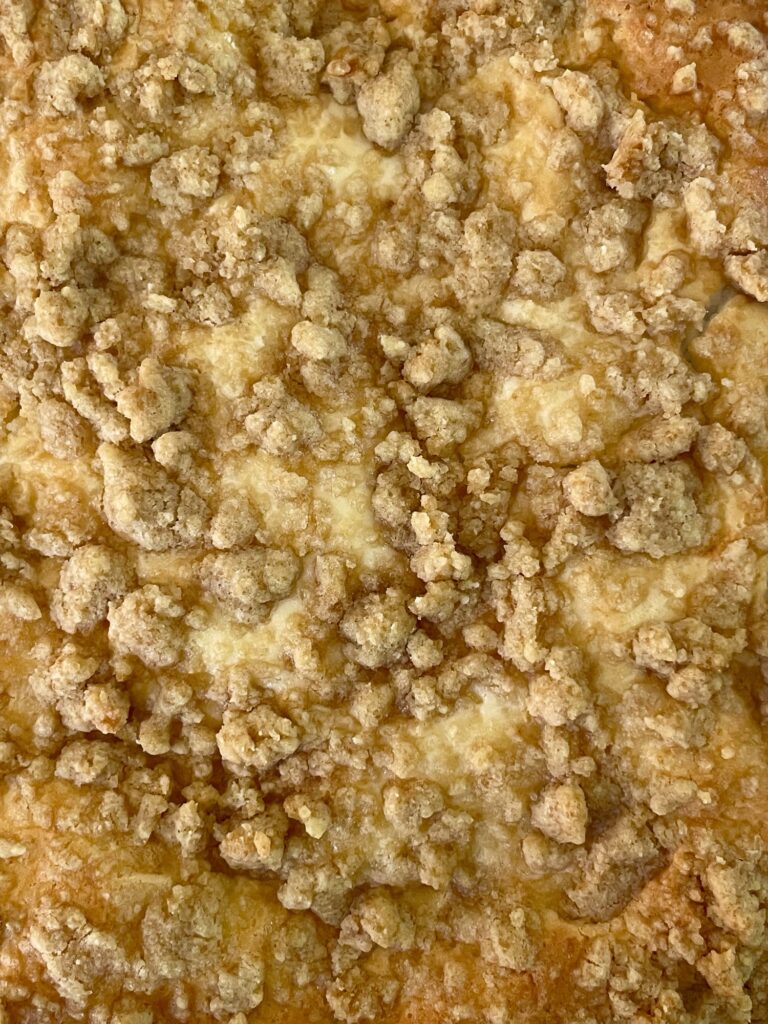
Using truly cold butter for the crumble — straight from the fridge, cubed — is what keeps it crumbly instead of turning into a paste once you start working it with your hands. If the butter softens too much, you’ll end up with more of a dough than distinct little crumbs.
That contrast matters here more than in a simple crumble recipe, since this crumble sits on top of a soft foam layer — you want that textural difference to really stand out once it’s baked.
Frequently Asked Questions
Yes, thinly sliced apples work as a substitute, though the flavor and texture will be slightly different since apples tend to hold a bit more bite than pears.
It’s best to stick with fresh here — frozen pears release a lot of extra moisture as they thaw, which can make the filling too watery and affect how the foam layer sets.
Use the toothpick test — insert a toothpick into the center, and if it comes out clean (or with just a few moist crumbs), it’s done. The center should still have a slight jiggle, similar to a cheesecake.
Use regular granulated sugar in the same amount, plus a small splash of vanilla extract or bourbon vanilla to make up for the flavor.
Yes, you can 😉
⚠️ Before you start, check the Notes section at the bottom — there are a few tips that’ll save you some trouble!
What you need 🛒
- Base
- 6 eggs (4 whole + 2 yolks)
- 150g granulated sugar
- 1 packet vanilla sugar (8g)
- 70ml neutral oil (I used sunflower)
- Zest of 1 lemon
- 250g all-purpose flour
- 2 tsp baking powder (~10g)
- Pinch of salt
- Pear Filling
- 4 pears (use 3 for less fruit)
- 30g caramel (or maple syrup/corn syrup)
- Pinch of nutmeg (optional)
- 1/2 tsp cinnamon (optional)
- Crumble
- 70g cold butter
- 70g brown sugar
- 6 tbsp all-purpose flour
- Foam Topping
- 2 egg whites (reserved from base)
- Pinch of salt
- 1 tsp lemon juice
- 80g powdered sugar
- 400g Greek yogurt or sour cream
- 2 tbsp corn starch
⚠️ Don’t forget to check the Notes section at the bottom before you get started!

Pear Crumble Cloud Cake🍐
Ingredients
Method
- Preheat: Preheat the oven to 180°C.
- Whip the eggs: Mix the 4 whole eggs, 2 egg yolks, and both sugars until pale and fluffy.
- Add wet ingredients: Add the oil and lemon zest, and mix.
- Add dry ingredients: Add the flour, baking powder, and salt, and fold in gently with a spatula.
- Transfer: Pour the batter into a baking form.
- Prep the pears: Slice the pears into thin half-moons (about 0.5cm thick) and add to a bowl.
- Season: Add the caramel, cinnamon, and nutmeg (if using), and mix.
- Layer: Pour the pears with their filling over the base so every inch is covered.
- The crumble: Mix the cold, cubed butter with the brown sugar and flour using your hands until crumbly.
- The egg whites: Whisk the 2 egg whites with a pinch of salt until slightly frothy — they'll still look a bit pale/yellowish.
- Add lemon juice: Once slightly frothy, add the lemon juice while continuing to whisk, until the mixture turns white and frothy.
- Add sugar: While whisking, gradually add the powdered sugar and whisk until stiff peaks form.
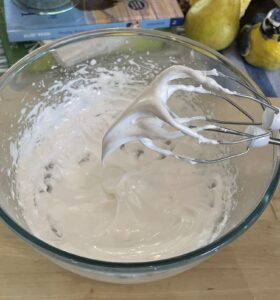
- Fold in the rest: Add the Greek yogurt (or sour cream) and cornstarch, and gently fold to combine. Pour the foam mixture on top, followed by the crumble.
- Bake: Bake at 180°C for 45-50 minutes, until the edges are golden and the center is lightly golden.
- Cool: Let the cake cool for at least 20-30 minutes before slicing, so the foam layer has time to set properly. Enjoy 😉
Notes
- I recommend weighing everything out with a kitchen scale, especially if you’re using the cups measurements — one cup of flour can vary a lot depending on how it’s scooped, so a scale gives you much more accurate, consistent results
- If you don’t have vanilla sugar packets, use regular sugar and add splash of vanilla extract instead
- Make sure the butter for the crumble is truly cold (straight from the fridge) — this is what keeps it crumbly instead of turning into a paste when you mix it with your hands
- You can use store-bought caramel, but if you don’t have one on hand, you can make it yourself 😉 recipe here-caramel
- Don’t skip separating the egg whites carefully for the foam — even a small bit of yolk can prevent the whites from whipping up properly
- When making the foam, weigh out the powdered sugar and Greek yogurt/sour cream ahead of time — makes the process much easier
[…] you enjoy these types of recipes be sure to check out my Pear Crumble Cloud Cake🍐 or my Traditional Slovak […]