

Themes That Might Interest You⬇️
- The “No-Fry” Difference
- Turmeric: The Golden Health Booster
- Why Partially Blend?
- Carrots & Potatoes: A Nutrient-Packed Base
- Curry Cubes vs. Individual Spices
- What to Serve It With
- FAQ
The “No-Fry” Difference
Traditional katsu curry usually gets its richness from a breaded, deep-fried cutlet sitting on top of the sauce — delicious, but not exactly something you can throw together on a random weeknight without a mess of oil. This version skips the frying step entirely and still delivers that same cozy, comforting curry flavor.
That means you’re cutting out a significant amount of added unhealthy fat, while keeping everything that actually makes katsu curry great: the warm spices, the thick golden sauce, and the tender vegetables. It’s proof that “lighter” doesn’t have to mean “less satisfying.”
Turmeric: The Golden Health Booster
That vivid golden color in your curry isn’t just for looks — it’s coming straight from the turmeric, and turmeric brings real health benefits along with it. Its active compound, curcumin, has well-known anti-inflammatory and antioxidant properties.
It’s a small amount in this recipe, but turmeric is one of those spices that earns its place in a dish for more than flavor alone. Pairing it with black pepper (which you’ve got here too) actually helps your body absorb its benefits more effectively.
Why Partially Blend?
The technique of blending two-thirds of the vegetables while keeping one-third whole is what gives this curry its signature texture — thick and creamy like a proper curry sauce, but still with tender bites of carrot and potato throughout instead of being a totally smooth purée.
It’s a simple trick, but it makes a big difference in how satisfying the dish feels to eat. A fully blended soup can feel a bit one-note, while this method gives you the best of both a hearty stew and a silky sauce in the same bowl.
Carrots & Potatoes: A Nutrient-Packed Base
This curry’s vegetable base isn’t just filler — carrots are one of the best natural sources of beta-carotene, which your body converts into vitamin A, important for eye health and immune function. Their natural sweetness also helps balance out the warm, earthy spices.
Potatoes bring their own benefits too, including potassium and a good dose of vitamin C, plus the fiber and heartiness that make this dish genuinely filling despite being vegetable-forward. Together, they turn a simple spiced broth into a real, satisfying meal.
Curry Cubes vs. Individual Spices
Stellka’s Tip about swapping in curry cubes instead of individual spices is worth paying attention to, especially on a busy night. Curry cubes are pre-balanced with fat and seasoning, so they melt in and give you a rich, restaurant-style sauce with almost no effort.
Using individual spices like this recipe calls for by default gives you more control over the exact flavor and heat level, and it’s usually the lighter option nutritionally since you’re not adding the extra fat that cubes typically contain. Both routes get you to a great curry — it just depends on how much time (and control) you want that day.
What to Serve It With
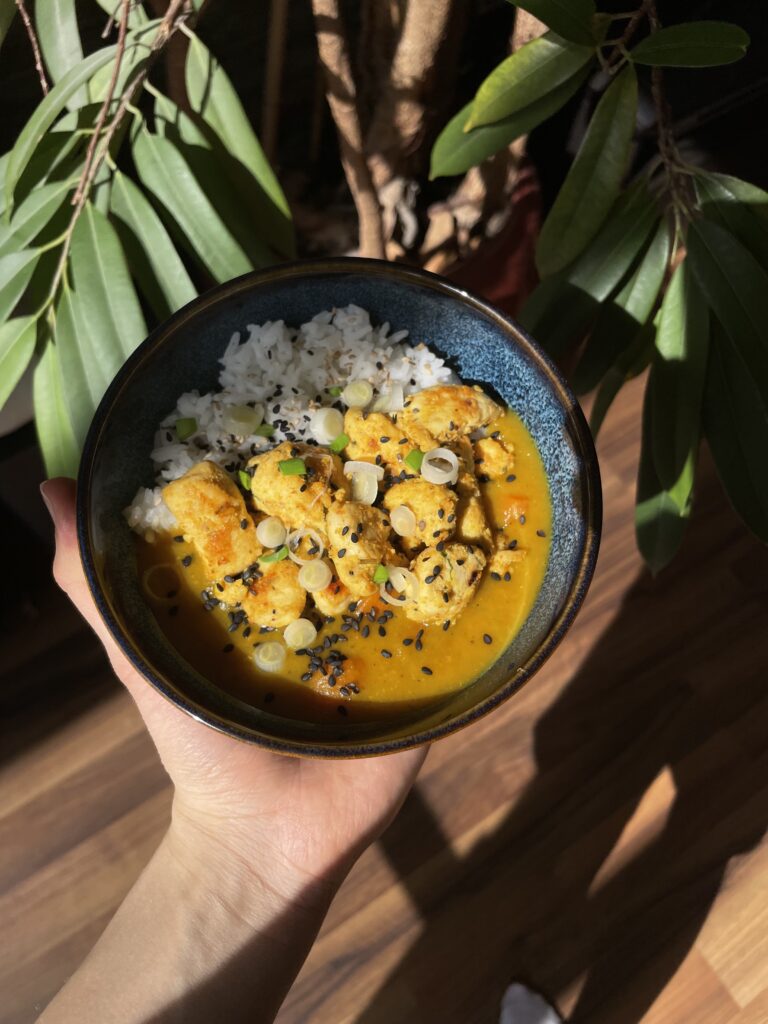
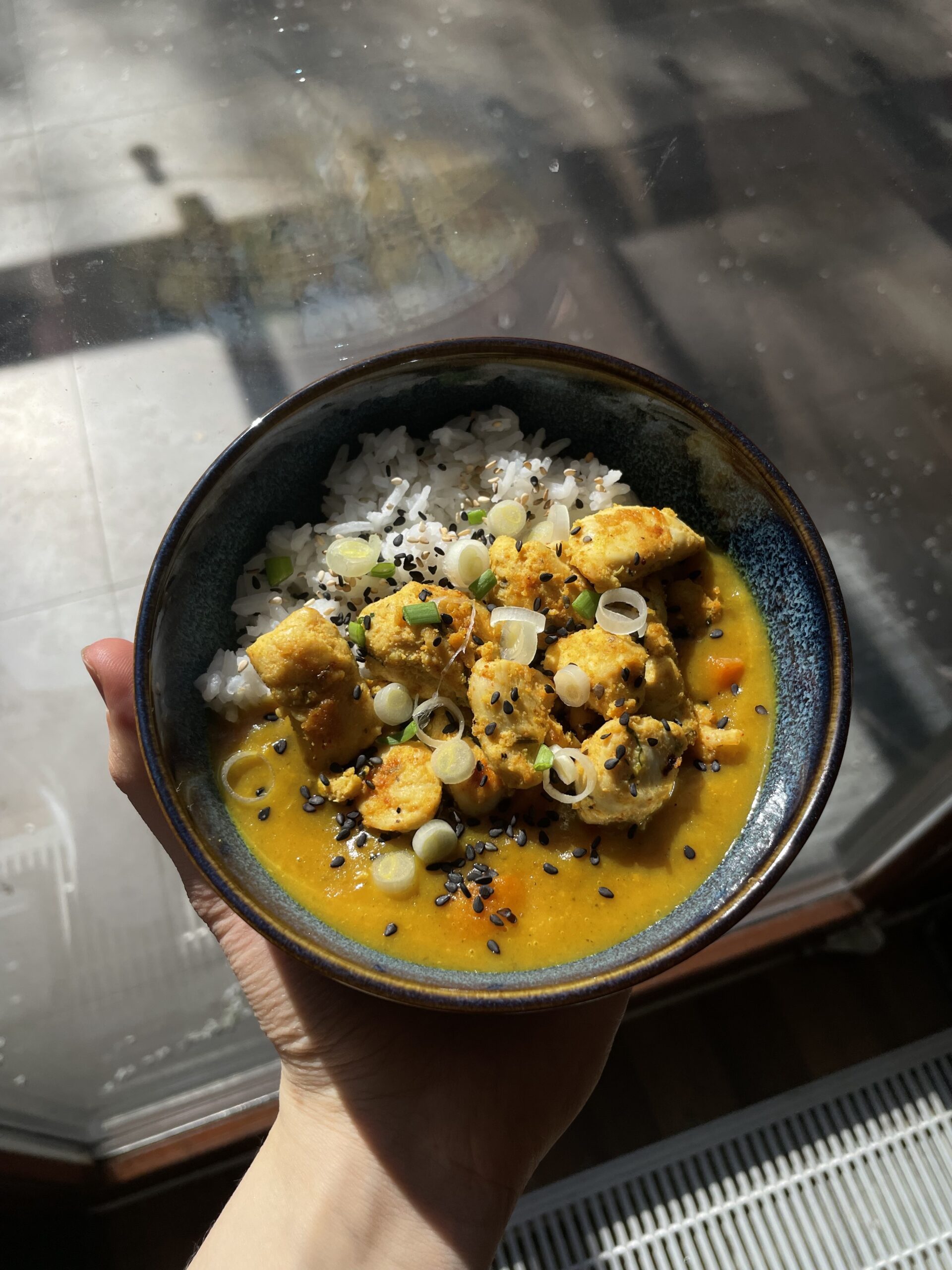
This curry is written to be a sauce, not a full standalone meal, and it’s flexible about what you build around it. Basmati rice is the classic pairing and soaks up the sauce beautifully, while a piece of chicken on the side turns it into a heartier, more protein-packed dinner.
The finishing touches matter too — a sprinkle of sesame seeds adds a bit of crunch and nutty flavor, and sliced spring onion brings a fresh, sharp contrast to all those warm, mellow spices. Small additions, but they round the dish out nicely.
FAQ
Yes — just skip the individual spices and add the cubes in after you’ve poured in your broth, letting them melt into the sauce as it simmers.
As written, yes — just use a vegetable broth instead of a meat-based one, and skip the chicken when serving if you want to keep it fully plant-based.
Very well — like most curries, it actually tastes even better the next day once the flavors have had time to meld. Store it in the fridge for up to 3-4 days.
Any kind works — vegetable, chicken, or even a light dashi-style broth if you want to lean into the Japanese flavor profile more.
What you need 🛒
- 1 medium carrot (100g)
- 1 small potato (190g)
- ½ onion (80g)
- 1 garlic clove
- 1cm fresh ginger
- 1 tbsp curry powder
- ½ tsp cumin
- ½ tsp turmeric
- 1 tsp salt
- ½ tsp ground pepper
- 350-400ml broth (any kind you prefer)

Japanese Katsu Curry (The No-Fry Version)
Ingredients
Method
- The Prep: Chop your carrots, potatoes, and onion into even pieces. Finely grate the ginger and garlic.
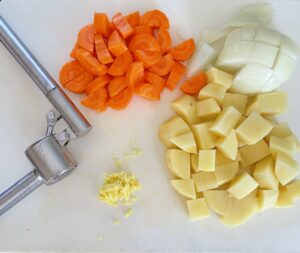
- Sauté: In a large pot, sauté the carrot, potato and onion for about 5 minutes until they start to soften.
- The Spices: Add the garlic, ginger, curry powder, cumin, and turmeric, and let them cook with the vegetables for another minute to release the flavors.
- Simmer: Pour in the broth and let the soup simmer for about 10 minutes until the vegetables are tender.
- The Texture: Take approximately 1/3 of the cooked vegetables out of the pot and set them aside. Use a blender or a food processor to blend the other 2/3 of the curry (it doesn’t need to be perfectly smooth).
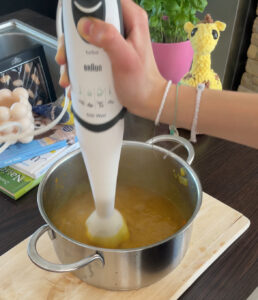
- The Finish: Add the 1/3 of whole vegetables back into the blended soup. Serve with basmati rice, chicken, sesame seeds, and spring onion. Enjoy! 😉
[…] If you like these type of meals be sure to check out my Golden Honey Dijon Salmon🐟 or Japanese Katsu Curry (The No-Fry Version)🥘 […]